Sewer Cleaning, Hydro Jetting & Robotic Pipe Cleaning
Sewer and storm drain cleaning, hydro jetting, root removal and descaling — plus every class of foreign object a jet truck leaves behind: concrete, calcium, grout and tuberculation. All of it in pipe a jet truck cannot reach, with a camera watching every foot. Robotic jetting adjustable from 10,000 to 40,000 psi, not a nozzle dragged through on faith.
Cleaning is usually the reason the inspection failed.
Most inspection reports that come back inconclusive come back that way because the line was never properly cleaned. Grease shelves, calcite, hardened sediment and root mass hide exactly the defects you are paying to find. And the standard answer — bring in a bigger truck — is unavailable the moment the asset sits inside an occupied building or past a gate a truck cannot pass.
Our cleaning platforms are self-propelled or hose-driven robots that carry their own camera. The operator watches the deposit come off in real time and stops when the pipe wall is clean — not when a scheduled number of passes is finished.
- Concrete and cement — construction spoil, set slurry, grout migration
- Calcium and calcite — mineral deposit and hard scale
- Tuberculation — corrosion nodules choking cast and ductile iron
- Grout — from neighbouring repairs and failed seals
- Grease, wax and soap-scale shelves
- Root mass and fine root hair at the joint
- Hardened sediment, sand, grit and debris
- Pre-lining preparation and post-lining cleanup
Clean and inspect on one hose
A jet-powered, steerable head with a Full HD live camera and a switchable forward jetting nozzle. It clears the blockage and shows you the damage on the same deployment, without a second contractor and without a second trip, which is why it is our first choice inside commercial and mid- to high-rise buildings.
| Parameter | Value |
|---|---|
| Minimum pipe, through multiple 45° bends | DN80 · 3" |
| Minimum pipe, through multiple 90° bends | DN100 · 4" |
| Strong cleaning performance to | DN200 · 8" |
| Camera inspection to | DN400 · 16" |
| Orientation possible to | DN800 · 32" |
| Hybrid hose length (by model) | 30–80 m · 100–265 ft |
| Hose rating | 300 bar · 4,350 psi |
| Minimum supply required | 30 l/min @ 110 bar · 8 gpm @ 1,600 psi |
| Lightest configuration | 29 kg · 64 lbs |
| Compact / long-range configuration | 63 kg · 139 lbs |
Why it wins inside buildings
Kevlar-reinforced hybrid hose that floats, resists elongation and slides through bends means the head reaches stack offsets and branch fittings a rigid rod will not. Collapsible handles and a 64 lb chassis mean it rides a service elevator and sets up in a mechanical room — no street frontage, no tenant relocation, no roof crane.
What you get back
- Live Full HD video of the cleaning as it happens
- Immediate identification of damage exposed by the cleaning
- Before / after footage per run, per riser or per branch
- A BSDI, LACP or PACP-coded record when the scope calls for it
Multi-function traction robots — large diameter and odd shapes
Self-propelled, hose-fed robots with front and rear cameras and a rotating nozzle head, covering 8" to 48" in our configuration. They pull their own hose, so cleaning force does not fall off with distance — and they run in circular, square, rectangular, S-shaped and vertical piping, which is where most municipal-spec equipment stops.
The same chassis also carries abrasive cleaning, dry-ice cleaning, laser profiling, wall-thickness measurement and epoxy rehabilitation tooling, so a line can be cleaned, measured and coated without a second contractor or a second mobilization. See all seven functions →
Distance without losing force
Runs of over 4,900 ft in a single deployment, at up to 2,362 ft/hr. Because the robot pulls its own hose rather than having it pushed from a manhole, cleaning energy at the far end is the same as it is at the near end.
Up to 540 lbf of traction
Enough to drive through standing debris and heavy deposit instead of stalling in front of it — and to carry the heavier tooling the six-function configurations need.
Submerged and non-circular
Operation in up to 10 m of water, front and rear cameras recording throughout, in round, square, rectangular, S-shaped and vertical structures — where most municipal-spec equipment stops.
Configurations accept turn-key tooling for cleaning, inspection, lining preparation, maintenance and repair. Full equipment schedule with model-level specifications is provided with any proposal, or on request.
Trailer jetters, sized to the site
Trailer-mounted jetters and vacuum trucks are the conventional half of the fleet, and we make no special claim about them — every contractor has this equipment. They matter here for one reason: they supply the water side of the robotic work where a hydrant or building supply will not. 12 gpm at 3,000 psi off a 200-gallon tank with wireless remote is enough to feed a robotic head on a campus, a base or a job with no municipal supply nearby, towed behind the same van that carries the robots.
- Self-contained water supply for no-hydrant sites
- Wireless remote so one operator runs pump and robot
- Tows behind a service van — no second truck
- Low-volume, high-pressure profile: less water hauled, less to dispose of
What a cleaning mobilization looks like
How long it takes depends on what is in the pipe. A grease or root job is often a day. Set concrete, hardened calcium or a failed liner in a long run can be several, and a line that is being cleaned, surface-prepared and then coated is a multi-day sequence by definition — the coating will not go on a wall that is not ready for it. We would rather give you an honest duration up front than a one-day number that turns into a change order on day three.
Scope, duration and pricing depend on diameter, deposit type and access. Send us the situation and we will size it.
Occupied buildings are the hard version of this work.
Stacks, risers and building laterals have to be cleaned and inspected with residents in their units, carpet underfoot and no place to park a jet truck. That is a different job from a street main, and it is the one our building platforms were bought for — including cable machines with chain, blade and abrasive heads, because high-pressure water in a closed system of traps and fixtures can lift a toilet seal or put water on the floor below.
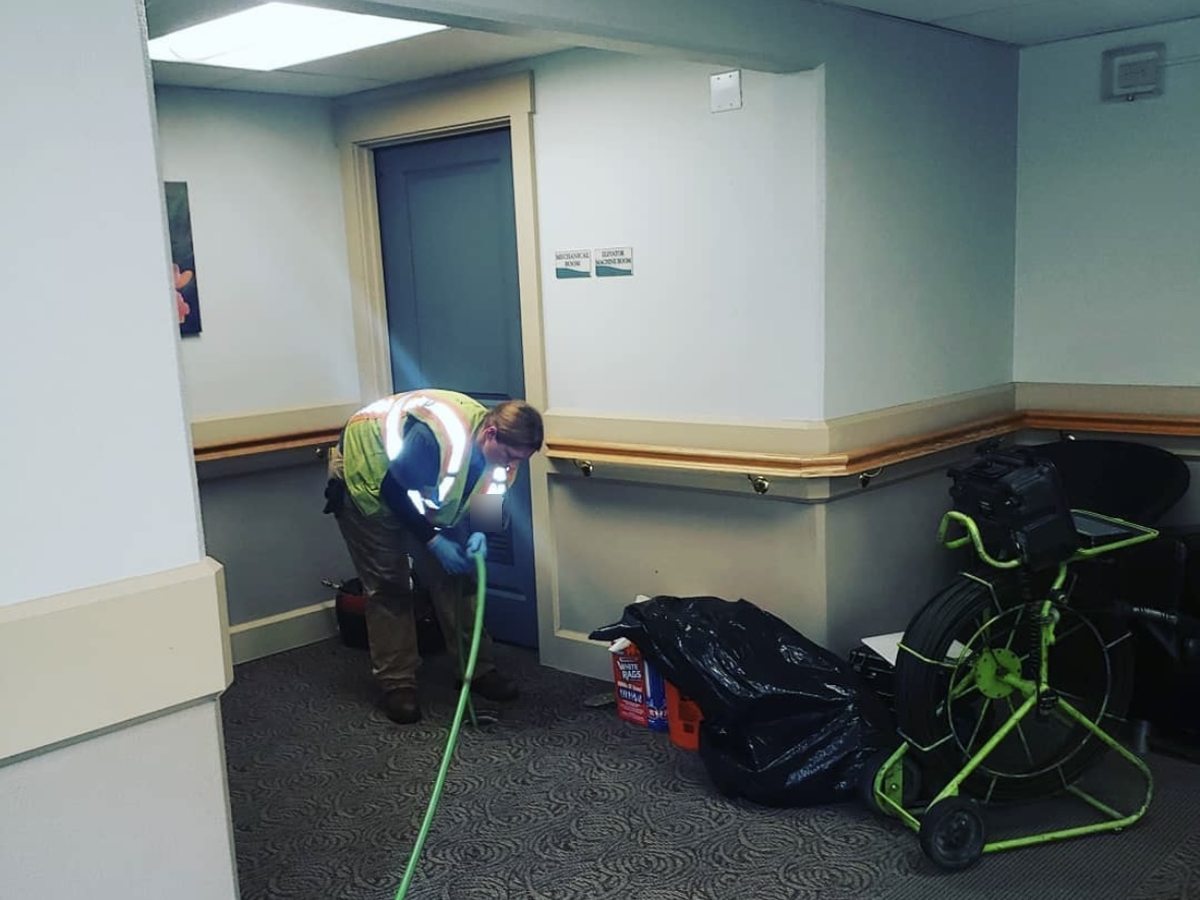
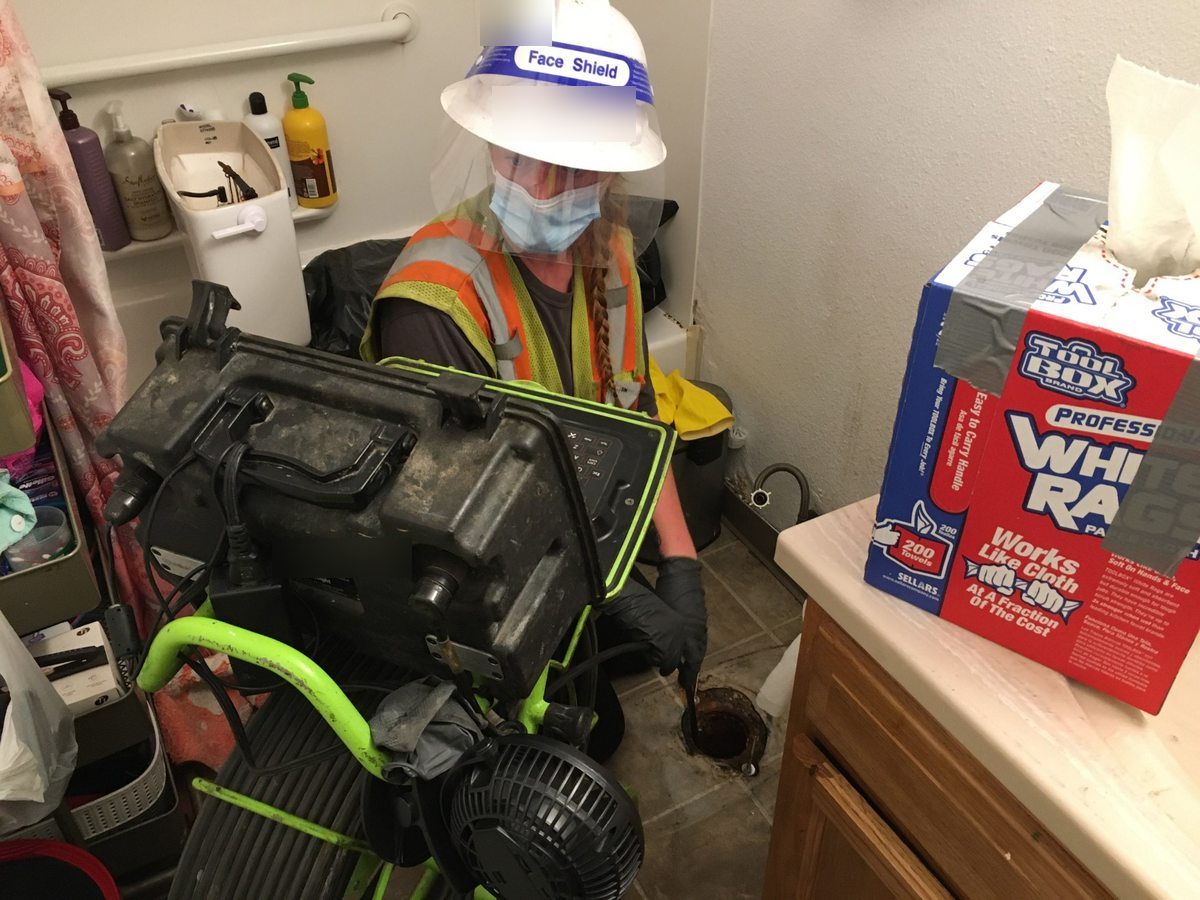
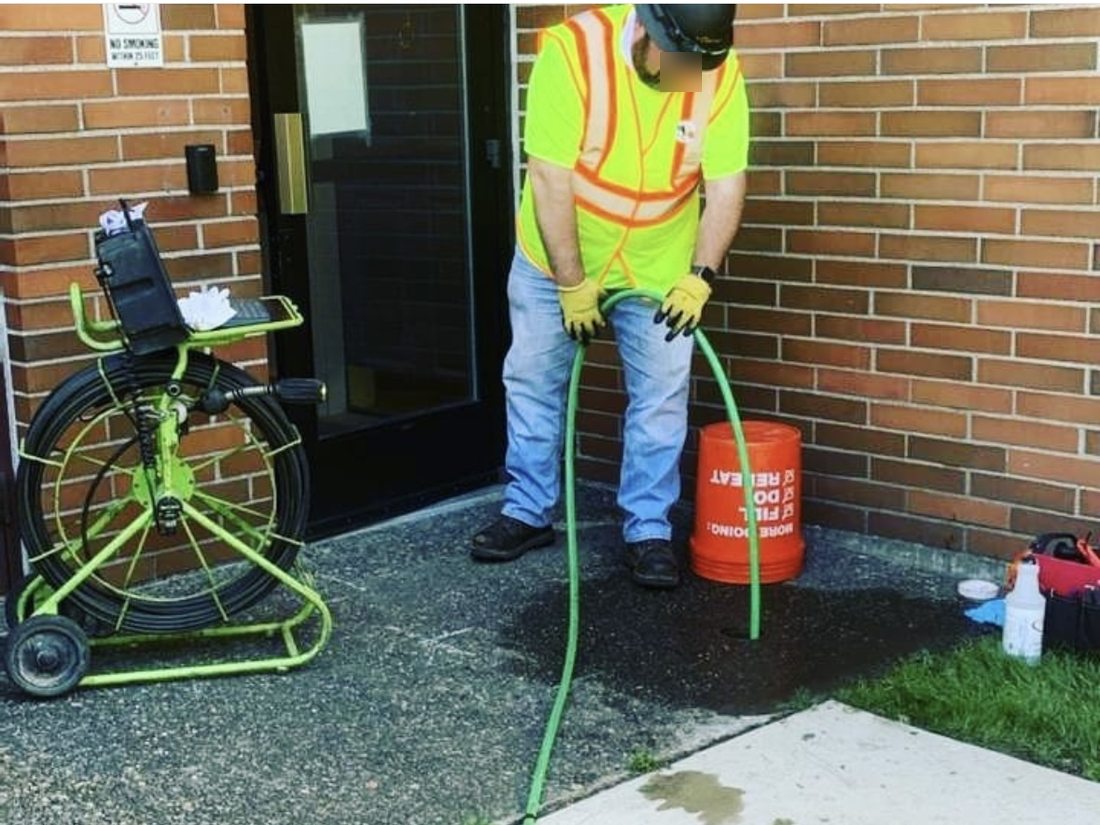
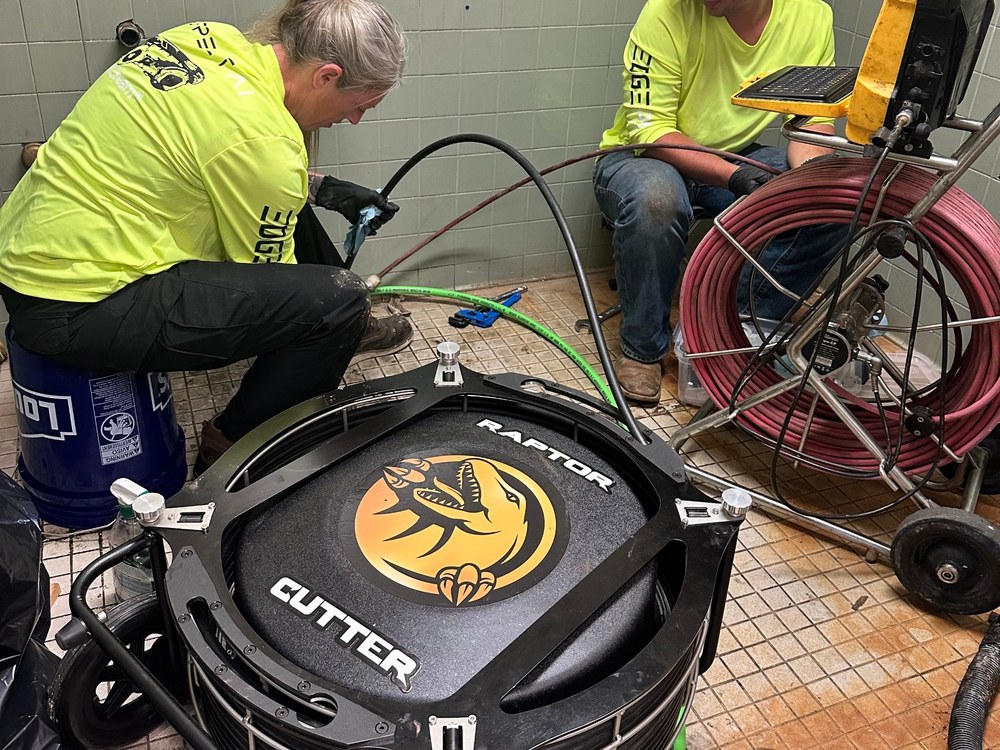
Project photography from work performed by our crews and by our leadership’s prior companies. Client-identifying detail removed.
The same pipe, before and after.
The only honest way to show cleaning work is the same asset twice. These are corrugated metal, concrete and coated pipe — different substrates, different deposits, the same robot and the same water.
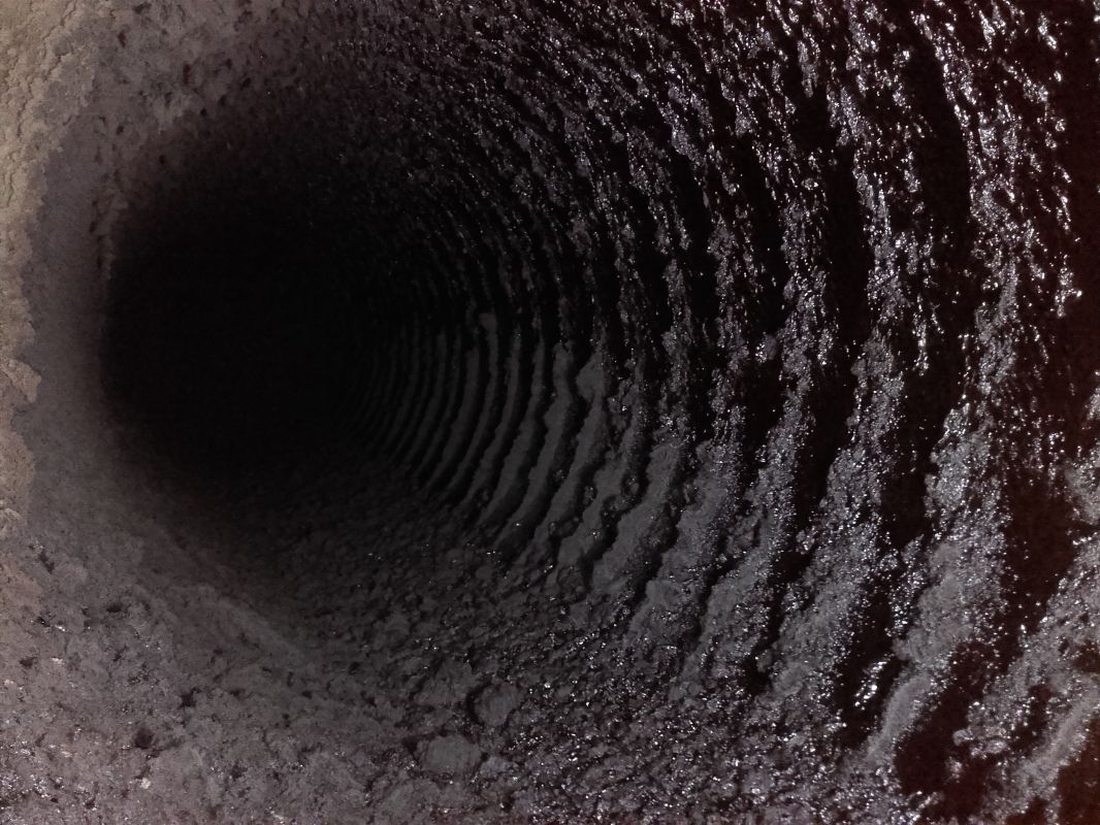
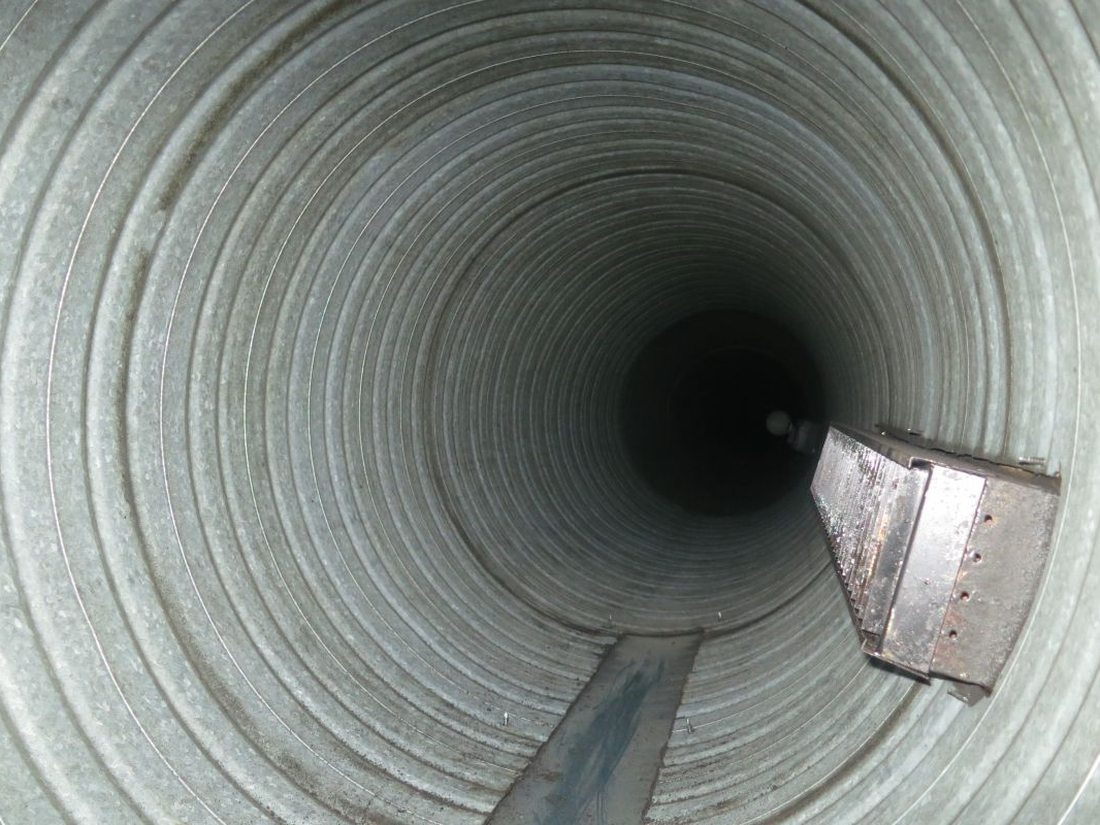
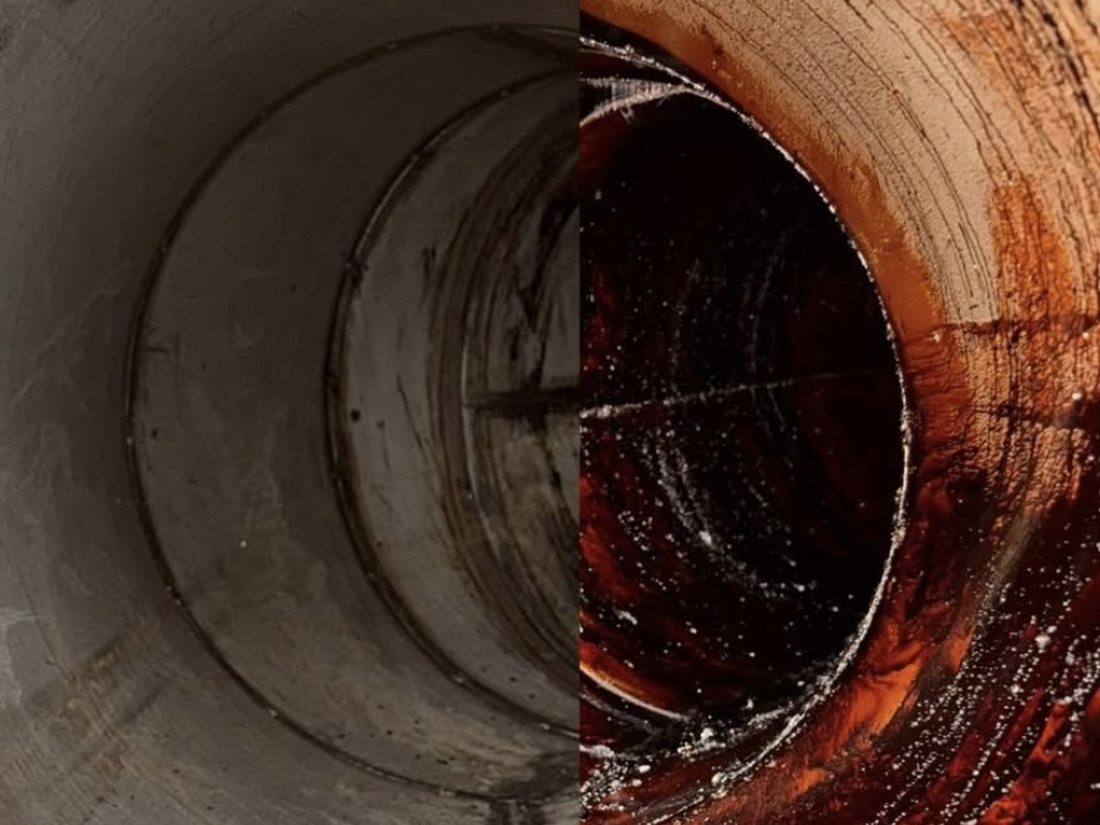
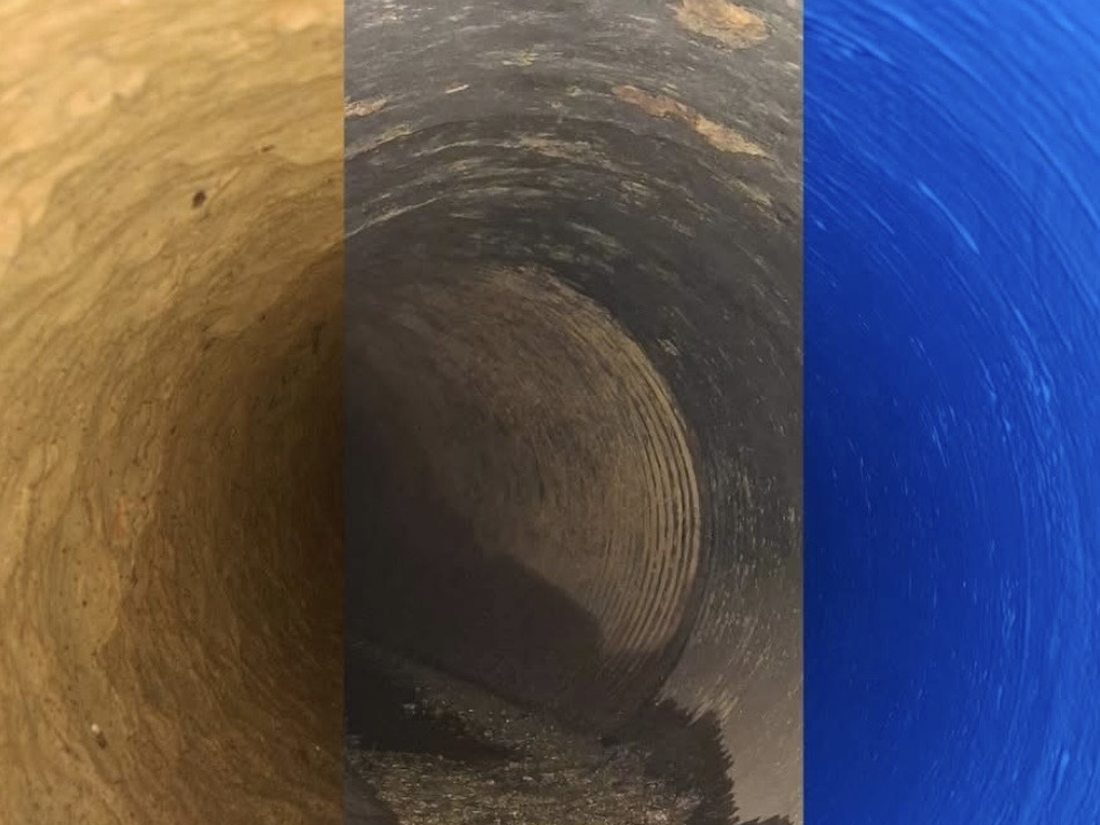
Before-and-after sequences supplied by the equipment manufacturer and used with permission. TPR-Group is a certified user of these platforms and runs them on our own projects.
This is what was in the pipe.
Deposit classes that stop a conventional nozzle cold — set concrete, hardened calcium, failed liner and grout — taken out of live assets and laid on the pavement.
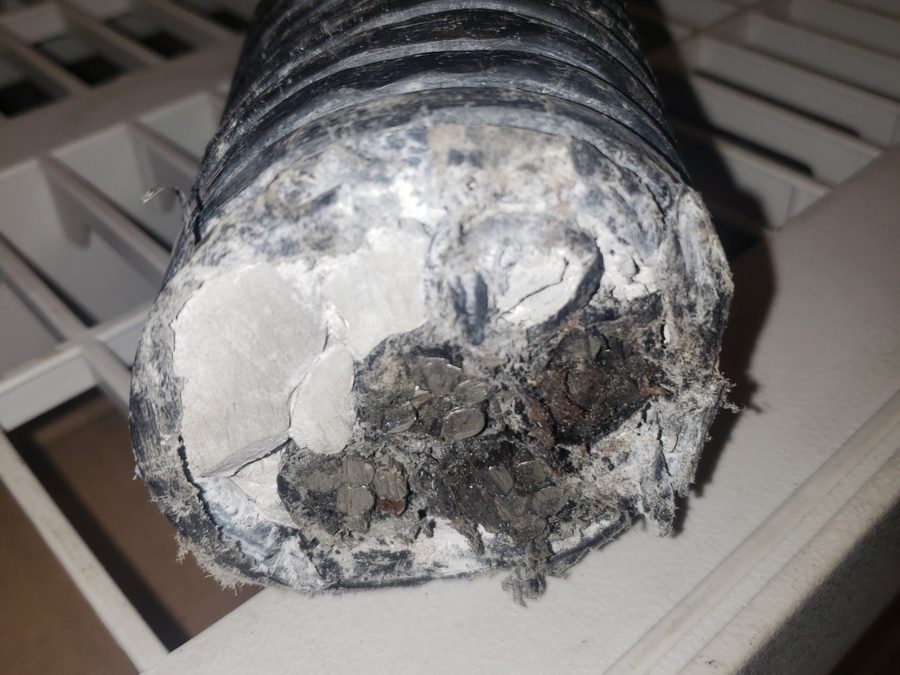
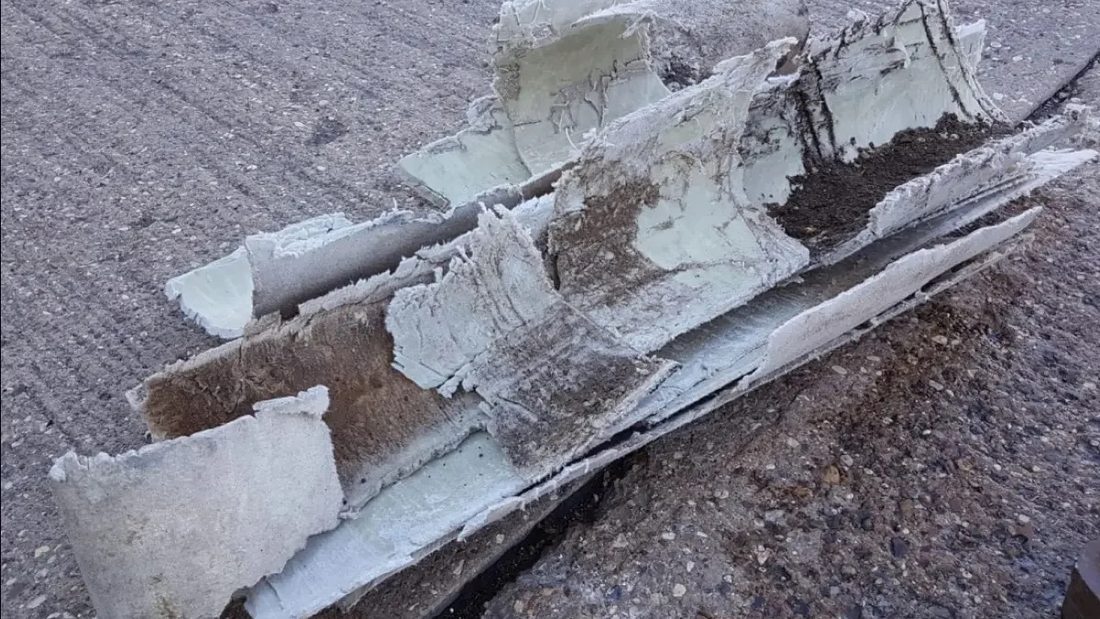
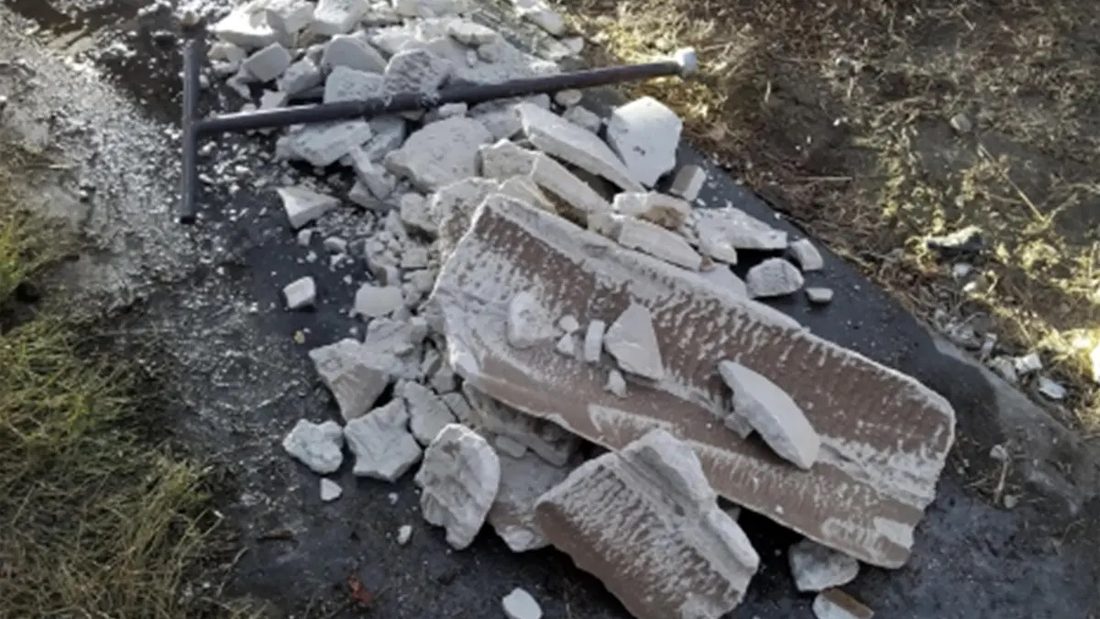
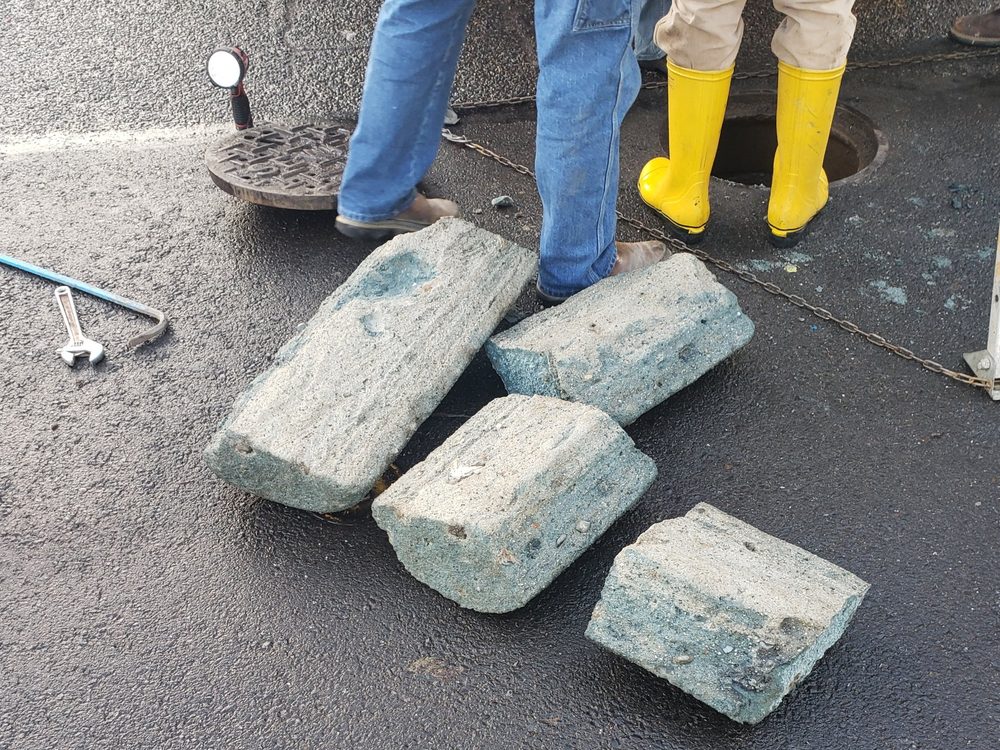
Project photography from work performed by our crews and by our leadership’s prior companies. Client-identifying detail removed.
Cleaning is usually step one of three.
On a corroded or coating-failed line, taking the deposit off is what makes the real decision possible. Our traction platform carries the whole sequence, so a pipe can be cleaned, prepared, recoated and verified without coming out of the ground and without a second contractor on a second mobilization.
Clean
Deposit, scale, biofilm and failed coating removed by ultra-high-pressure water, with the camera recording the condition underneath as it is exposed.
Prepare the surface
Abrasive or dry-ice media where water alone will not give an adhesion profile — and remaining wall measured before anything is committed to.
Apply the coating
Protective epoxy applied in place by the same robot. Corrosion arrested, service life extended, and no excavation to put the line back in service.
Verify
A final inspection pass on the finished surface, recorded alongside the before condition — one continuous record from fouled pipe to coated pipe.
On schedule: this is a sequence, not a single visit. Cleaning has to finish and the surface has to be right before any coating goes down, and on a heavily fouled or corroded line that is several days of work before step three starts. We scope it that way from the beginning rather than discovering it on site.
Where it earns its keep: lines that would otherwise be replaced. Restoring the internal coating is the alternative to digging up and re-laying an asset that still has wall left in it — which is exactly why we measure the wall before we quote the coating.
Clean it and see it on the same job.
Tell us the pipe size, the deposit and where the asset sits. We will tell you which platform reaches it.