Built for the sites where conventional access fails
Municipalities, water and sewer districts, military installations, industrial plants, federal and government campuses, DOT drainage and power generation share one problem: the pipe that matters most is usually the pipe a truck cannot reach. We work these across Seattle and Washington State, and nationwide on the flyaway service.
Military & Defense
Installations run collection and drainage systems on the scale of a small city, inside a perimeter where staging a large truck, closing a route or opening a trench triggers a process nobody wants to start.
- Base-wide collection system assessment and condition coding
- Hangar, maintenance bay and wash-rack trench drains
- Housing area laterals and private-side service lines
- UHP cutting for obstructions without excavation inside the perimeter
- Man-portable deployment on flight lines and restricted areas
- Flyaway service — robots shipped in transit cases, crew flown in, support equipment sourced locally, for installations no specialty contractor is near
- Documentation formatted for facility asset management systems
Veteran-owned. We understand escorted access, work windows and why "we'll just dig it up" is the wrong answer on an active installation.
Industrial
Process drains, trench systems, cooling loops and effluent lines fail in ways municipal gravity sewer does not — calcite, chemical scale, product solids — and the plant cannot stop running so you can look at them.
- Process and trench drain cleaning without production shutdown
- Calcite and chemical scale removal by UHP water, not chemicals
- Non-circular structures — square, rectangular and S-shaped runs
- Ovality and material-loss measurement on aging process lines
- Pre-lining cleaning and post-lining reinstatement
- Confined-space work performed by robot, not by personnel
- Flyaway service for plants outside our road network — robots shipped, crew flown in, van, vac truck and UHP pump trailer rented in the local market
Government & Federal
Federal campuses, correctional facilities, hospitals, airports and port authorities operate on continuity requirements that make a multi-day lane closure or a corridor shutdown unacceptable.
- Facility-wide sanitary and storm assessment with certified coding
- Work performed through existing cleanouts and manholes
- Minimal footprint: one van, two technicians, no traffic control on most work
- 3D lateral and stack mapping where as-builts are missing or wrong
- Deliverables suitable for capital planning and compliance records
- Flyaway service for multi-site and out-of-region campuses, with full UHP capability on arrival rather than inspection only
Municipal & Commercial Networks
Collection-system programs, I&I investigations and the private-side laterals that drive most of the findings — plus the commercial and high-rise buildings that own the hardest vertical assets in any city. We work for cities, sewer districts and water district systems across Washington State.
- PACP mainline, MACP manhole, LACP lateral and BSDI building-side assessment programs
- Easement and back-lot mains that never get inspected
- Mid- and high-rise building stacks cleaned and inspected on one mobilization
- Property portfolios and campuses on a recurring assessment cycle
- Lateral reinstatement and protruding-tap removal after lining
- 3D route mapping for unmarked laterals before excavation
Engineering Firms & Specifiers
Consulting engineers and engineers of record bring us the assets that broke a conventional scope — and the condition data precise enough to specify a rehabilitation against.
- Subcontract inspection and cleaning on assets your prime could not reach
- Measured geometry — ovality, joint gap to 1/100", material loss — to design from
- 3D pipe routes where the record drawings are missing, wrong or unverifiable
- Pre-design condition assessment that survives a peer review
- Emergency removal of obstructions holding up a project schedule
- An honest first call: we will tell you when the answer is not robotic
Send us a still frame or thirty seconds of video from a failed run. That is usually enough for us to say whether it is solvable and what it takes.
DOT & Transportation
State and county DOT drainage is the asset class most often assessed from the ditch line with a flashlight. Culverts, cross-drains and storm systems under live roadway need the same condition data as a sanitary main, and nobody wants to close a lane to get it.
- Culvert and cross-drain inspection with measured geometry, not a visual call
- Corrugated metal pipe — invert loss, deformation and remaining wall measured in place
- Debris, sediment and hardened deposit removed without excavating under the roadway
- Work from the ditch line or the outfall, with no lane closure on most assets
- Assets with no paved approach, reached by service van and man-portable platform
- Coded condition data and 3D routes formatted for the agency’s asset system
A culvert that still has wall left is a cleaning and coating job, not a replacement. The measurement is what tells you which one you are looking at.
Water & Power Generation
Penstocks, raw-water intakes, cooling loops and outfalls lose capacity to biofilm, incrustation, sediment and invasive shellfish long before they lose integrity. Both problems are measured and fixed from inside the pipe.
- Hydroelectric penstock cleaning — biofilm, incrustation and sediment that show up first as hydraulic loss
- Raw-water intake and cooling-line biofouling, including invasive mussel and barnacle colonisation
- Coating degradation and corrosion assessed with remaining wall measured in place
- Internal coating restoration as an alternative to replacing the line
- Before-and-after condition documentation on every pass, as the record for the outage
- Work performed without human entry into the conduit
On a penstock the business case is usually efficiency, not failure: restored hydraulic performance pays for the outage. We will tell you honestly whether cleaning will move your numbers before you schedule one.
Where the asset is tends to be the whole problem.
Outfalls over water, culverts under embankments, utilities behind a security fence. If the equipment has to get there before the work can start, that is the part of the scope worth talking about first.
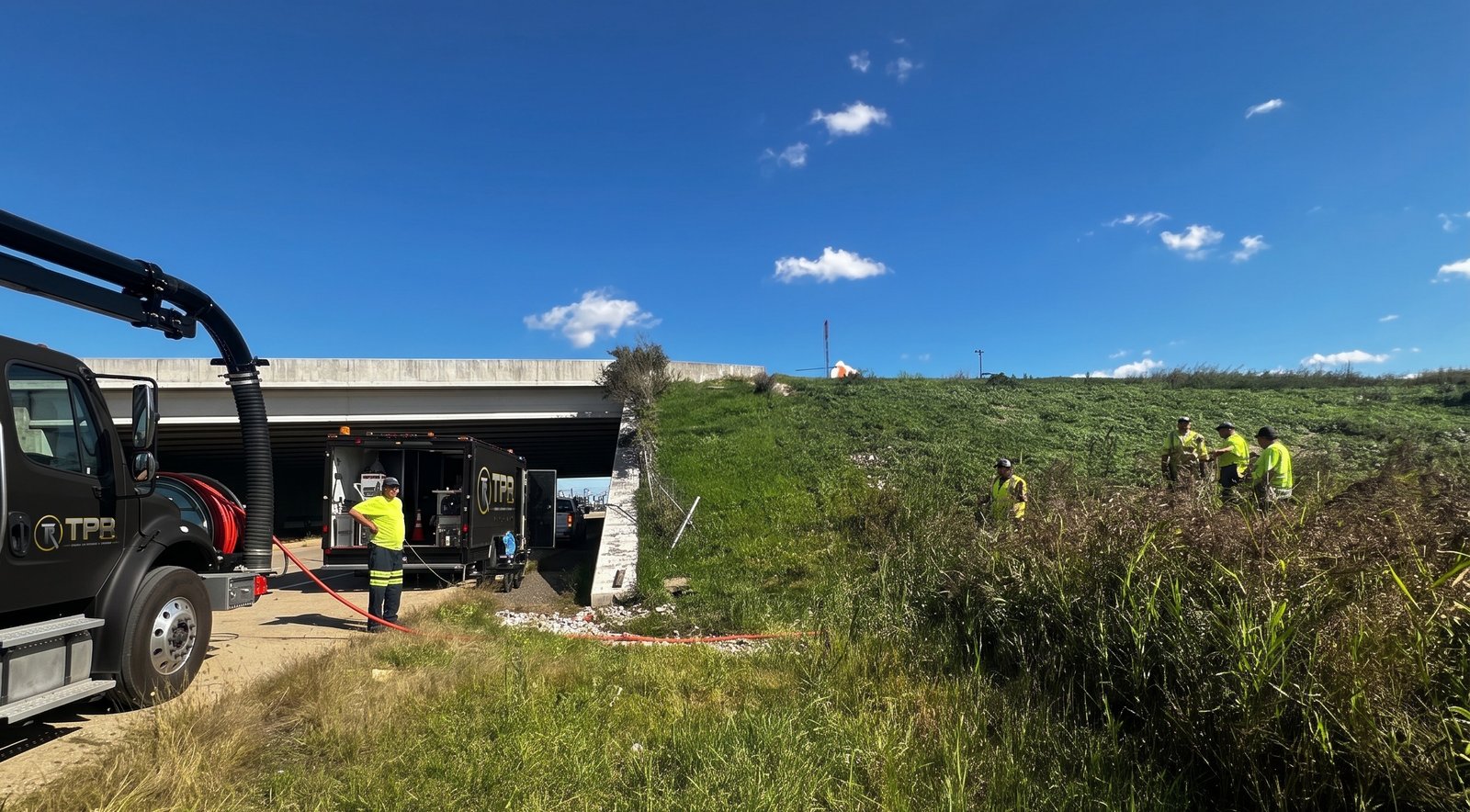
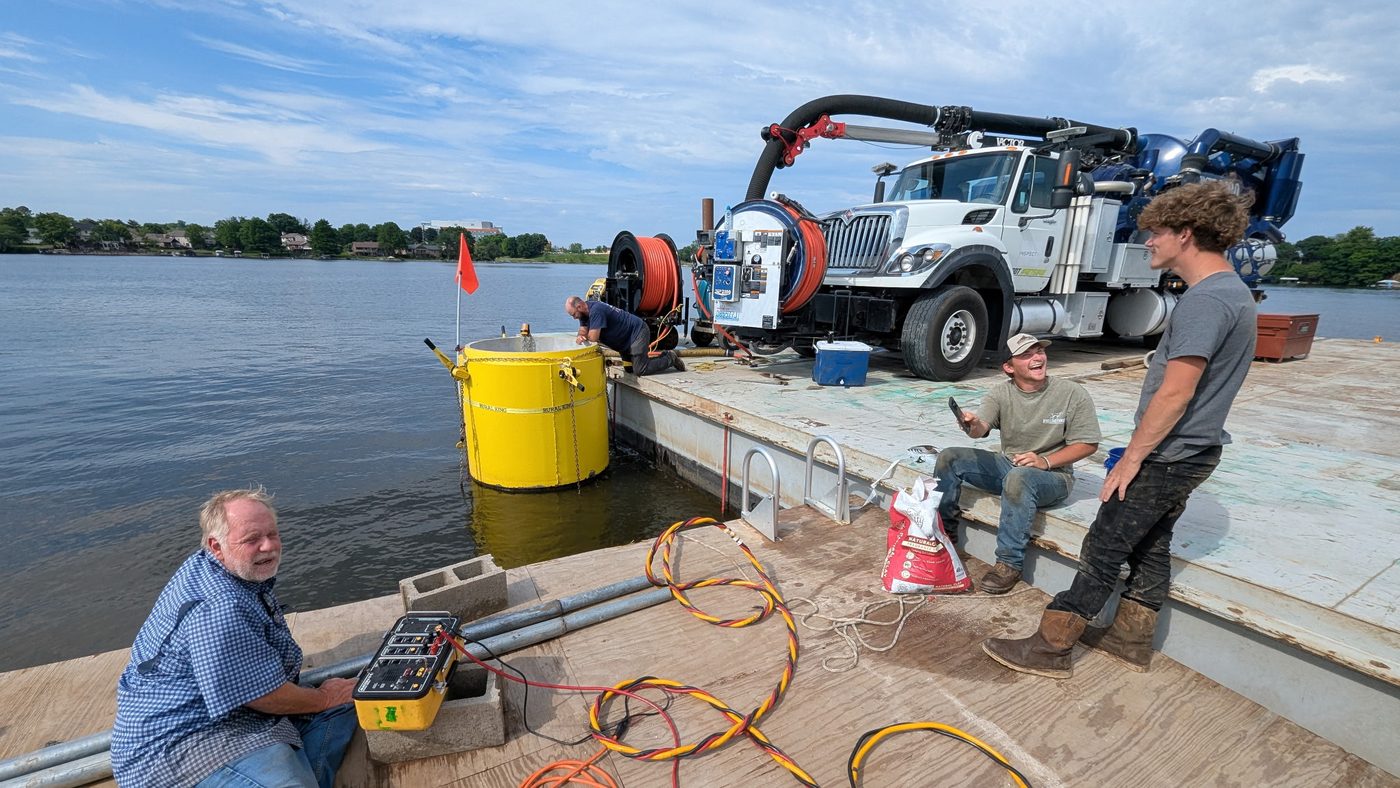
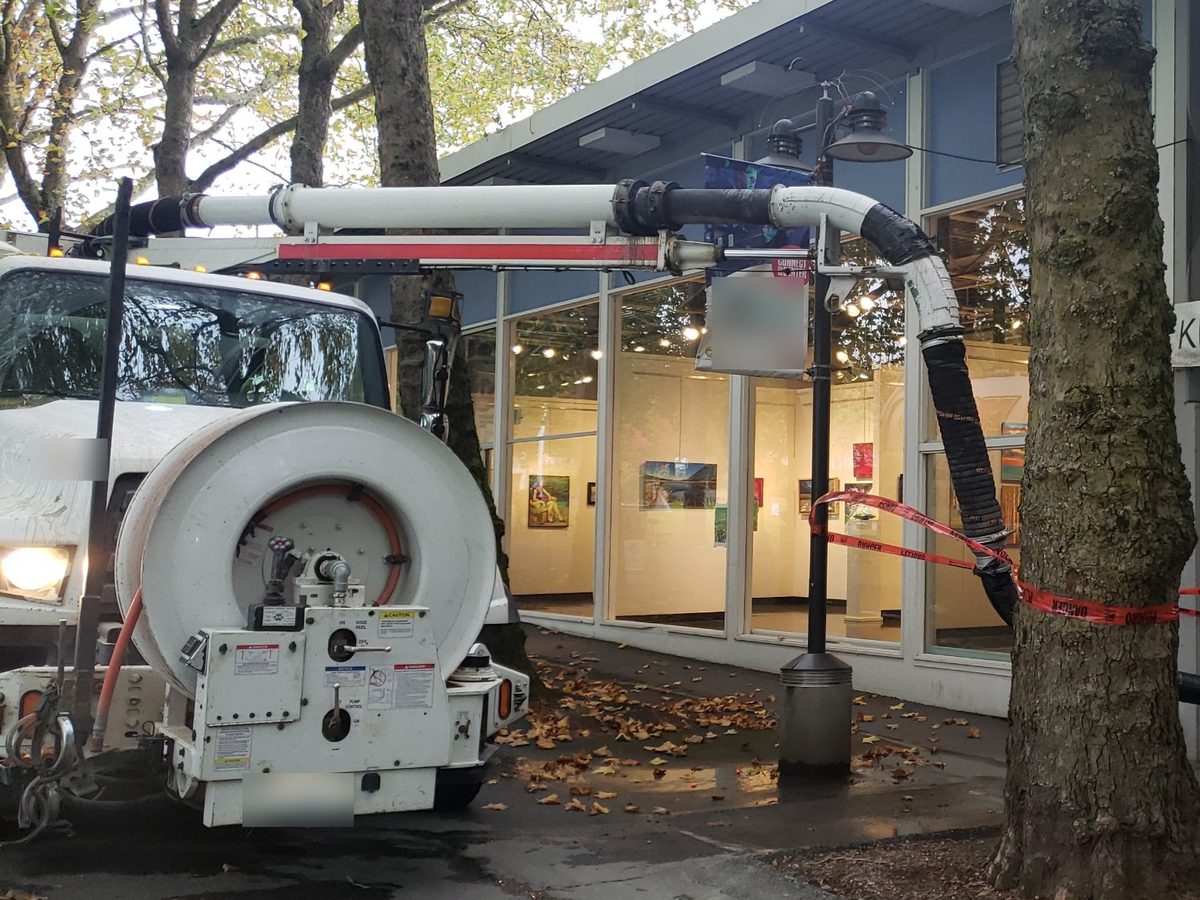
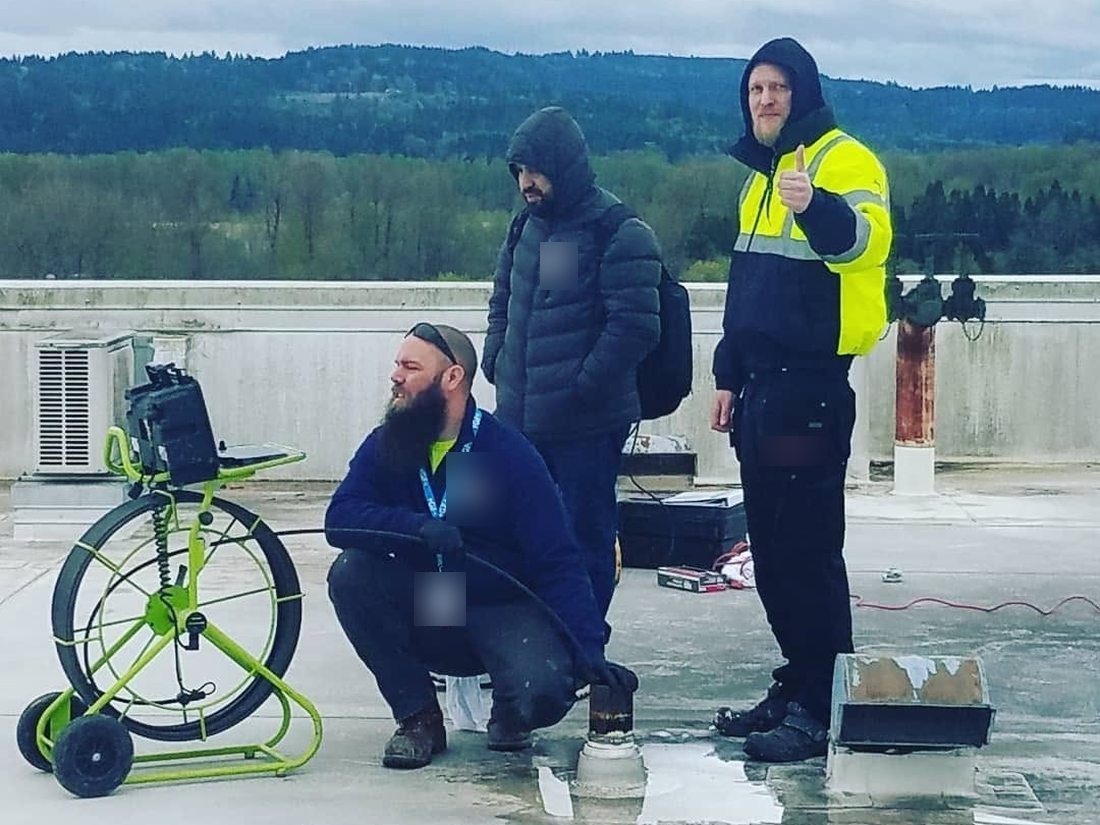
Project photography from work performed by our crews and by our leadership’s prior companies. Client-identifying detail removed.
Different site, same question.
Tell us what the asset is, where it sits and what is in the way. We will tell you whether we can reach it.